Heart Treatment Without Surgery.
- Home
- Heart Treatment Without Surgery.
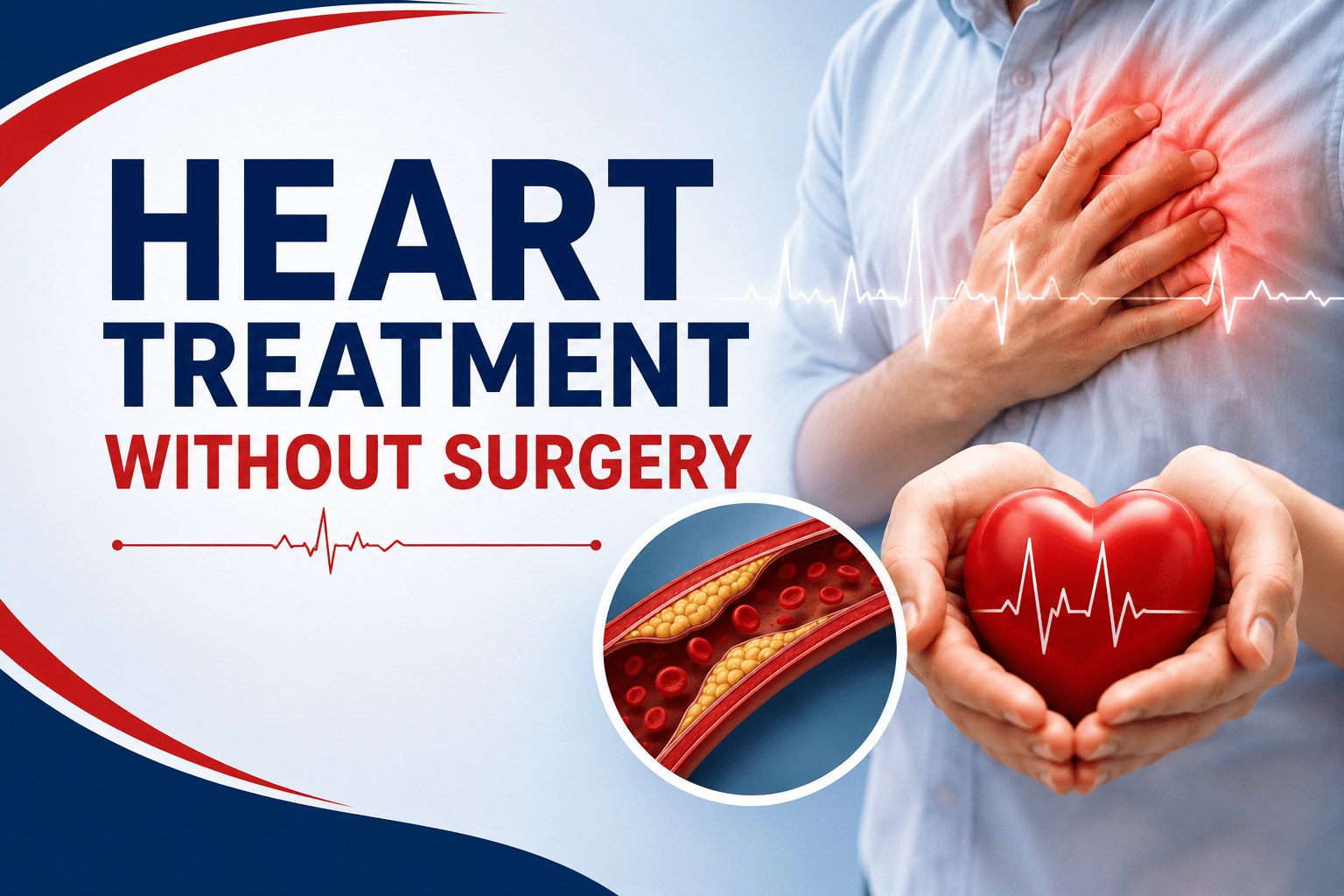
Heart disease is one of the most important health concerns today. Many people who are diagnosed with coronary artery disease (CAD) immediately worry that they will need angioplasty, a stent, or bypass surgery. However, heart treatment without surgery may be possible for some patients, depending on the severity of the disease, symptoms, test results, overall health, and the advice of a qualified healthcare professional.
The good news is that modern heart care isn’t limited to surgery. Lifestyle changes, medicines, risk-factor management, cardiac rehabilitation, and certain non-invasive therapies can play an important role in managing cardiovascular disease. In selected patients, treatments such as Enhanced External Counterpulsation (EECP) may also be considered for symptom management.
However, it’s important to understand one key point: there is no single treatment that works for every type or severity of heart blockage. A person with mild stable coronary artery disease may have very different treatment needs from someone with severe multi-vessel disease or an acute heart attack.
This guide explains seven important approaches, what they involve, their potential benefits and limitations, and when surgery or an emergency procedure may still be necessary.
A heart blockage usually refers to narrowing or obstruction in the coronary arteries—the blood vessels that supply oxygen-rich blood to the heart muscle.
The most common cause is atherosclerosis. Over time, cholesterol, fats, and other substances can form plaque inside artery walls. As plaque builds up, the artery can become narrower, reducing blood flow to the heart.
When blood supply doesn’t meet the heart’s needs, a person may experience angina, which can feel like pressure, heaviness, tightness, or discomfort in the chest. Some people may also experience shortness of breath, fatigue, sweating, nausea, or discomfort in the arm, shoulder, back, neck, or jaw.
Not everyone with coronary artery disease has obvious symptoms. That’s why controlling risk factors such as high LDL cholesterol, high blood pressure, diabetes, smoking, obesity and physical inactivity is so important.
Several factors can increase the risk of coronary artery disease:
These factors don’t act independently. For example, diabetes combined with high blood pressure and high cholesterol can significantly increase cardiovascular risk.
The good news is that several of these factors can be modified.
Symptoms can vary from person to person. Common symptoms include:
However, symptoms aren’t always a reliable measure of the severity of coronary disease.
Seek emergency medical care immediately for sudden or severe chest pain, especially when it occurs with shortness of breath, cold sweating, fainting, severe weakness, nausea, or pain spreading to the arm, back, neck, or jaw.
A healthcare professional may use several tests depending on the patient’s symptoms and risk factors. These may include:
The results help doctors understand the location and severity of disease and determine the most appropriate treatment.
There isn’t one universal approach to coronary artery disease. In many cases, treatment begins with risk-factor control, lifestyle changes and appropriate medicines. Other treatments may be considered when symptoms continue or when a patient meets specific clinical criteria.
Lifestyle management is one of the foundations of cardiovascular care.
A heart-friendly lifestyle can help control important risk factors and may slow the progression of coronary artery disease.
Focus on:
Healthy eating:
Choose more vegetables, fruits, whole grains, legumes, nuts and other nutrient-rich foods. Reduce excessive saturated fat, trans fat, added sugar and salt.
Regular physical activity:
Exercise can help improve fitness, weight management, blood pressure, blood sugar and cholesterol. However, people with diagnosed heart disease should discuss an appropriate exercise plan with their healthcare professional before starting a new program.
Quit smoking:
Smoking damages blood vessels and significantly increases cardiovascular risk. Quitting is one of the most valuable steps a smoker can take for heart health.
Maintain a healthy weight:
Even modest weight loss can improve several cardiovascular risk factors in people who are overweight.
Manage stress:
Long-term stress can make healthy habits harder to maintain and may contribute to unhealthy blood pressure, sleep, and eating patterns.
Get adequate sleep:
Consistent, good-quality sleep supports overall cardiovascular health.
Lifestyle changes aren’t a quick fix. They work best when they’re treated as a long-term routine rather than a short-term diet.
Medication can be an important part of non-surgical heart treatment.
Depending on the patient’s condition, doctors may prescribe medicines to:
Examples include statins, beta blockers, calcium-channel blockers, ACE inhibitors or ARBs, nitrates, and other medicines. The correct medication depends on the patient’s diagnosis and medical history.
It’s important not to stop prescribed heart medicines without medical advice.
High LDL cholesterol and uncontrolled blood pressure are two major cardiovascular risk factors.
Think of cholesterol management as a long-term investment in artery health. Your healthcare professional may recommend dietary changes, exercise, and cholesterol-lowering medication based on your risk profile.
Similarly, blood pressure should be monitored regularly.
Good blood pressure control helps reduce stress on the heart and blood vessels. If you have hypertension, take prescribed medication consistently and attend follow-up appointments.
Diabetes also deserves special attention. High blood sugar can damage blood vessels and increase the risk of cardiovascular complications.
Cardiac rehabilitation is a structured program designed to help people improve cardiovascular health after certain heart conditions or procedures.
It commonly combines the following:
Cardiac rehabilitation isn’t only about exercise. It teaches patients how to build sustainable habits and safely return to physical activity.
For people with established cardiovascular disease, a medically supervised rehabilitation program can be an important part of long-term care.
EECP may be considered for selected patients with chronic stable angina, particularly when symptoms continue despite conventional treatment or when other procedures aren’t suitable.
During treatment, the cuffs provide sequential pressure intended to support blood flow and reduce the workload on the heart.
Treatment typically requires multiple sessions, so commitment and patient suitability are important considerations.
Mayo Clinic includes EECP among therapies that may be considered for some people whose angina hasn’t improved sufficiently with other treatments.
However, EECP shouldn’t be described as a universal replacement for angioplasty or bypass surgery. Whether it is appropriate depends on the patient’s medical condition.
A comprehensive heart plan should look beyond the arteries themselves.
For example, a person with coronary artery disease may also have:
Managing these conditions can make a meaningful difference to overall cardiovascular health.
Instead of focusing only on one number—such as cholesterol—look at the complete picture.
A doctor may review your blood pressure, glucose, cholesterol profile, weight, symptoms, physical activity, and family history before developing a treatment plan.
Some clinics offer additional therapies or wellness approaches as part of a broader cardiovascular care plan.
However, patients should be careful about claims that a therapy can “remove” or “dissolve” every coronary blockage naturally.
Evidence varies significantly among different therapies. Some approaches may have a role in symptom management or supportive care, while others have limited or uncertain evidence for coronary artery disease.
For example, therapies such as chelation or ozone therapy should not be presented as proven substitutes for evidence-based emergency treatment, angioplasty, or bypass surgery when those treatments are medically indicated.
Always discuss complementary therapies with your doctor, particularly if you’re already taking cardiovascular medicines.
This is one of the most common questions patients ask.
The answer is “sometimes, depending on the type and severity of coronary artery disease.”
For some people, doctors may initially recommend lifestyle changes and medicines. If symptoms are controlled and the person’s cardiovascular risk is appropriately managed, surgery may not be required.
Non-surgical management may be appropriate when
The treatment plan may change over time. A patient who initially manages symptoms with medicines and lifestyle changes may later require additional evaluation if symptoms worsen.
There are situations where non-surgical management isn’t enough.
Angioplasty and stenting may be recommended in selected patients with significant coronary narrowing, particularly when symptoms aren’t adequately controlled or when urgent blood-flow restoration is required.
Bypass surgery may be recommended for certain patterns of severe coronary artery disease, including some patients with multiple significant blockages or disease affecting important coronary vessels.
Shanikrupa Heartcare notes that bypass surgery may be considered when several coronary arteries are significantly diseased, when certain major arteries are affected, or when angioplasty isn’t suitable or hasn’t worked.
Therefore, “without surgery” shouldn’t mean “avoid surgery at all costs.”
The goal should always be the safest and most effective treatment for the individual patient.
Two people can both be told they have “80% blockage,” yet their treatment needs may be very different.
The percentage of narrowing is only one part of the clinical picture.
Doctors may also consider:
That’s why an online article can’t determine whether a particular person needs EECP, medication, angioplasty, or bypass surgery.
Non-surgical approaches can provide important advantages, but they also have limitations.
Depending on the treatment and patient’s condition, non-surgical care may help:
One major benefit is that many of these approaches can become part of a long-term heart-health plan.
Non-surgical treatment isn’t appropriate for every patient.
For example:
This is where realistic expectations matter.
A good heart-care plan isn’t about promising a miracle. It’s about identifying the patient’s actual risk, selecting appropriate evidence-based treatment and monitoring progress over time.
Choosing a treatment shouldn’t be based only on the desire to avoid surgery.Instead, start with a complete medical evaluation.
A doctor may review:
This information helps determine what additional tests may be needed.
If you’ve been told you have a heart blockage, ask your doctor:
Don’t hesitate to ask for an explanation in simple language. Understanding your condition can help you make better decisions.
In some patients, coronary artery disease can be managed without surgery using lifestyle changes, medicines, and other appropriate therapies. However, treatment depends on the severity and location of the blockage, symptoms, heart function, and overall health. Some patients may still require angioplasty or bypass surgery.
EECP may be considered for selected patients with chronic stable angina, particularly when symptoms continue despite other treatments or when invasive procedures aren’t appropriate. However, it isn’t a universal substitute for bypass surgery. The appropriate treatment depends on individual clinical findings.
Yes. Healthy eating, regular physical activity, avoiding tobacco, maintaining a healthy weight, managing blood pressure, and controlling cholesterol and diabetes can all support cardiovascular health. Lifestyle changes are generally an important part of coronary artery disease management.
No. EECP isn’t appropriate for everyone. Certain heart, blood vessel, and other medical conditions may make the treatment unsuitable. A healthcare professional should evaluate your medical history before treatment.
You can’t control every risk factor, such as age or family history. But many important factors can be managed. Don’t smoke, stay physically active, eat a heart-healthy diet, and maintain a healthy weight and manage cholesterol, blood pressure, and diabetes.
Age alone doesn’t determine the best treatment. Doctors consider overall health, symptoms, heart function, other medical conditions, frailty, and the severity of coronary artery disease. An older adult may benefit from medical management, an interventional procedure, or surgery depending on these factors.
It depends on the severity of your condition and your symptoms. Some people with stable coronary artery disease can exercise safely under medical guidance, while others need further evaluation first. Don’t begin an intense exercise program without discussing it with your healthcare professional if you’ve been diagnosed with heart disease.
WhatsApp us