Heart Attack at 30 or 40: Why Younger Indians Are at Risk
- Home
- Heart Attack at 30 or 40: Why Younger Indians Are at Risk
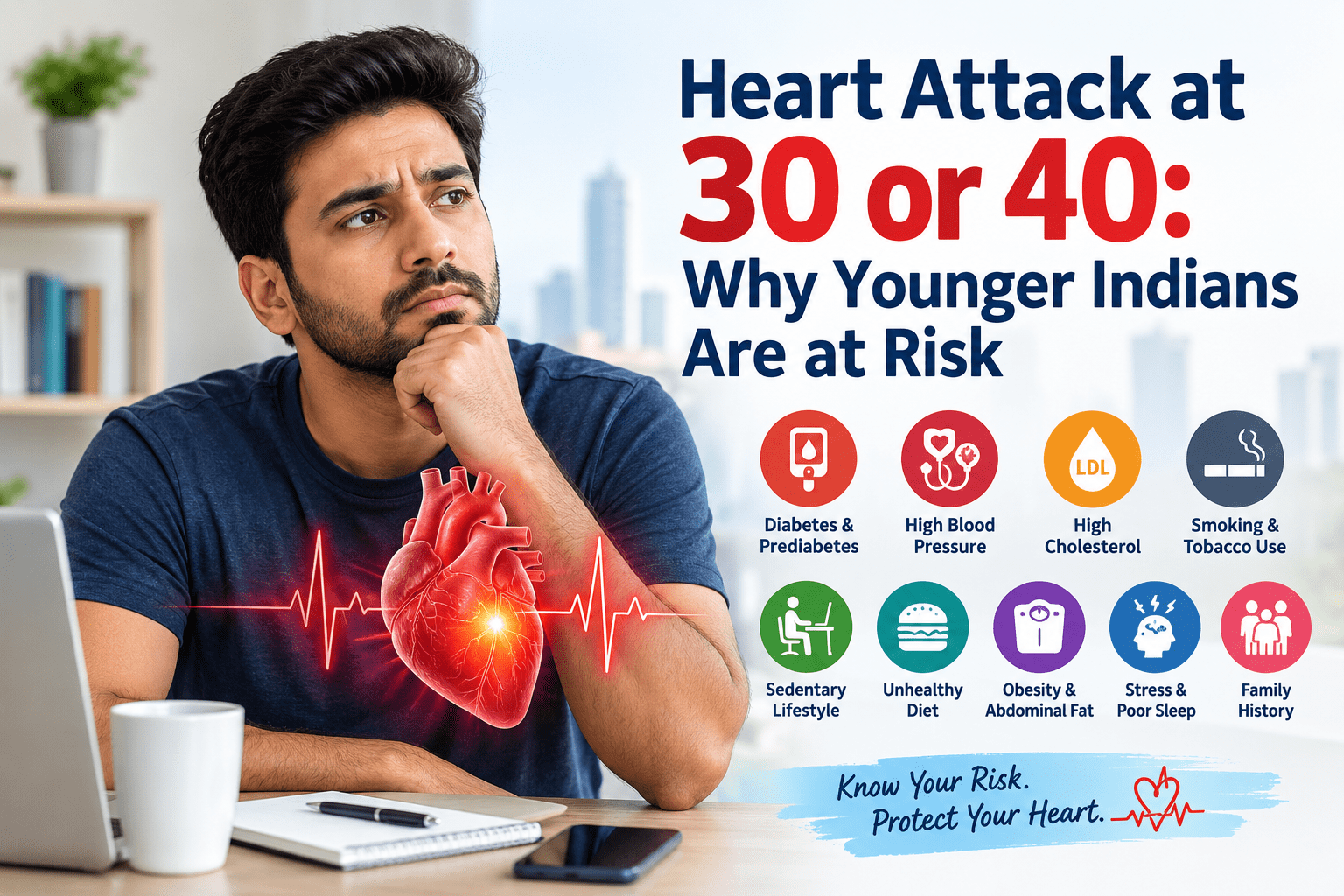
A heart attack is often associated with older age. But that assumption can create a dangerous sense of security among people in heart attack at 30 or 40.
A person may look healthy, have a demanding career, exercise occasionally and still have cardiovascular risk factors that are developing silently.
In India, cardiovascular disease remains a major health concern. WHO India reports that cardiovascular disease accounts for a substantial share of deaths from noncommunicable diseases, while high blood pressure, raised blood glucose, abnormal blood lipids and excess weight are important cardiovascular risk factors.
The important message is not that everyone in their 30s or 40s is at high risk. Instead, it is that age alone should not be considered protection against heart disease.
Understanding your risk factors early can give you an opportunity to make lifestyle changes, undergo appropriate health checks, and seek medical advice before a serious cardiac event occurs.
Yes. Although the risk of cardiovascular disease generally increases with age, heart attacks can occur in younger adults.
A heart attack usually happens when blood flow to part of the heart muscle becomes severely reduced or blocked. Coronary artery disease, in which plaque builds up inside the coronary arteries, is an important underlying cause.
The process that contributes to cardiovascular disease can develop over many years. High LDL cholesterol, high blood pressure, diabetes, tobacco use, obesity, physical inactivity and an unhealthy diet can contribute to cardiovascular risk.
Some younger adults may also have inherited risk factors, such as familial hypercholesterolemia or a strong family history of premature cardiovascular disease.
A 2024 review published in the Indian Heart Journal highlighted the importance of identifying and managing dyslipidemia in young adults and noted that coronary artery disease, myocardial infarction and sudden death can occur in Indian adults aged 18–40. The review also emphasized lipid screening and risk assessment, particularly when family history and conditions such as diabetes or hypertension are present.
There is no single reason why a young Indian adult may develop cardiovascular disease. Usually, several risk factors interact over time.
Diabetes is a major cardiovascular risk factor.
WHO India reports that diabetes substantially increases the risk of heart attack and stroke, and many people may remain unaware that they have diabetes or prediabetes.
High blood glucose can damage blood vessels over time and contribute to cardiovascular complications.
This is why checking blood glucose or HbA1c when clinically appropriate can be important, especially for people with excess weight, family history, high blood pressure or other risk factors.
Hypertension is often called a “silent” condition because many people have no obvious symptoms.
WHO states that high blood pressure increases the risk of heart disease, stroke and other complications. Regular blood pressure measurement is one of the simplest ways to identify the problem.
A busy 30- or 40-year-old may ignore routine health checks because they feel healthy. That can allow hypertension to remain undetected for years.
Cholesterol itself is not always a problem. The concern is an unhealthy lipid profile, particularly elevated LDL cholesterol and other lipid abnormalities.
Excess LDL cholesterol can contribute to plaque formation in the arteries.
Young adults with a strong family history of heart disease or very high cholesterol may need earlier assessment and, in some cases, treatment recommended by a healthcare professional.
Smoking and tobacco use significantly increase cardiovascular risk.
Tobacco can damage blood vessels and contribute to processes that increase the risk of heart attack and stroke.
This includes cigarettes as well as other forms of tobacco. Quitting tobacco is one of the most important steps a person can take to improve cardiovascular health.
Modern work often involves long hours sitting at a desk, commuting, using screens and spending little time in physical activity.
Insufficient physical activity is a recognized cardiovascular risk factor. WHO recommends regular physical activity as part of cardiovascular disease prevention.
You do not need to become an endurance athlete to improve your heart health. Building regular movement into your daily routine can be a practical starting point.
Frequent consumption of highly processed foods, excessive salt, sugary drinks, foods high in saturated or trans fats and oversized portions can contribute to cardiovascular risk.
A heart-friendly eating pattern generally emphasizes vegetables, fruits, whole grains, pulses, nuts and other nutrient-dense foods while limiting excess salt, added sugars and unhealthy fats.
The goal is not a temporary “heart diet.” It is a sustainable eating pattern that can be followed for years.
Excess body weight, particularly excess abdominal fat, is associated with several cardiovascular risk factors, including high blood pressure, abnormal cholesterol and diabetes.
Even when a person is relatively young, increasing waist circumference combined with poor metabolic health deserves attention.
Work pressure, financial concerns, family responsibilities and prolonged psychological stress can affect lifestyle habits and overall cardiovascular health.
Stress may also contribute indirectly by disrupting sleep, increasing sedentary behaviour, encouraging unhealthy eating or tobacco use, and making it harder to maintain regular exercise.
Good sleep and stress-management habits should therefore be considered part of a broader heart-health strategy.
You cannot change your genes, but knowing your family history can help you understand your risk.
If a parent or close relative experienced heart disease at a relatively young age, tell your doctor.
A strong family history may influence when cholesterol testing and cardiovascular risk assessment should begin.
Never assume that chest symptoms are “just acidity” simply because you are young.
Possible heart attack symptoms include:
Symptoms can vary from person to person. Women may be more likely to experience symptoms such as shortness of breath, nausea, vomiting or back and jaw discomfort.
If you suspect a heart attack, seek emergency medical care immediately. Do not wait for symptoms to disappear and do not attempt to self-diagnose the cause.
The good news is that many cardiovascular risk factors can be modified.
Depending on your individual risk, discuss appropriate health checks with a healthcare professional. These may include:
Additional cardiovascular investigations should be based on individual risk and medical advice rather than performed routinely without a reason.
If you smoke or use tobacco, quitting is one of the most important actions for your cardiovascular health.
If quitting is difficult, speak with a healthcare professional about evidence-based tobacco cessation support.
Build regular physical activity into your week.
Walking, cycling, swimming, strength training and other appropriate activities can contribute to cardiovascular fitness.
If you already have heart disease, significant symptoms or other medical conditions, ask your healthcare professional what level of exercise is appropriate.
A practical Indian heart-health approach can include:
Healthy eating should be realistic enough to maintain over the long term.
If you are overweight or have excess abdominal fat, gradual and sustainable weight management can improve several cardiovascular risk factors.
Avoid extreme diets or unverified “detox” programs.
If you have hypertension, diabetes or high cholesterol, do not ignore it simply because you feel well.
These conditions may not produce obvious symptoms but can increase long-term cardiovascular risk.
Follow your healthcare professional’s recommendations regarding lifestyle changes, monitoring and medication when prescribed.
Tell your doctor if close relatives have had premature heart disease, heart attacks or very high cholesterol.
This information can help determine whether you need earlier or more intensive risk assessment.
One of the biggest misconceptions about heart health is that prevention should begin after middle age.
In reality, cardiovascular risk factors can accumulate for years before a person experiences symptoms.
Prevention is therefore not about waiting for chest pain. It is about identifying risk factors early and managing them.
For someone in their 30s or 40s, preventive heart care may involve understanding family history, checking blood pressure, assessing metabolic risk, improving lifestyle habits and discussing appropriate testing with a qualified healthcare professional.
WHO emphasizes that identifying people at increased cardiovascular risk and ensuring appropriate management can help prevent premature cardiovascular events.
Yes. Heart attacks can occur in younger adults, although age-related risk generally increases as people get older. Risk factors such as tobacco use, diabetes, high blood pressure, abnormal cholesterol, obesity, family history and physical inactivity can increase cardiovascular risk.
There is usually no single cause. Coronary artery disease and cardiovascular risk factors can contribute. Inherited cholesterol disorders, diabetes, hypertension, smoking, obesity, and other factors may increase risk.
Common symptoms include chest pressure or discomfort, shortness of breath, sweating, nausea and pain or discomfort that may spread to the arm, shoulder, back, neck or jaw. Symptoms vary, so suspected heart attacks require immediate medical attention.
Chronic stress can negatively affect cardiovascular health and may contribute indirectly through poor sleep, unhealthy eating, inactivity, tobacco use and other behaviours. Severe or sudden stress can also affect the cardiovascular system. Persistent stress should therefore be taken seriously as part of overall health management.
Cholesterol assessment may be appropriate for young adults, particularly when there is a family history of heart disease, diabetes, hypertension, or other cardiovascular risk factors. The Indian Heart Journal review cited above recommends attention to lipid screening in young adults.
Focus on controllable risk factors: avoid tobacco, remain physically active, eat a balanced diet, maintain a healthy weight, monitor blood pressure and cholesterol, manage diabetes if present, sleep adequately, and discuss your family history with a healthcare professional.
No. Chest pain can have many causes, including gastrointestinal, muscular, respiratory, and cardiac conditions. However, potentially serious cardiac causes should not be dismissed. New, severe, or unexplained chest discomfort—especially with shortness of breath, sweating, nausea, or pain spreading to the arm or jaw—requires urgent medical assessment.
Some cardiovascular risk factors and diseases can be identified before a heart attack occurs through medical history, physical examination, and appropriate tests. The exact tests required depend on a person’s age, symptoms, and risk profile.
WhatsApp us