EECP Treatment for Erectile Dysfunction
- Home
- EECP Treatment for Erectile Dysfunction
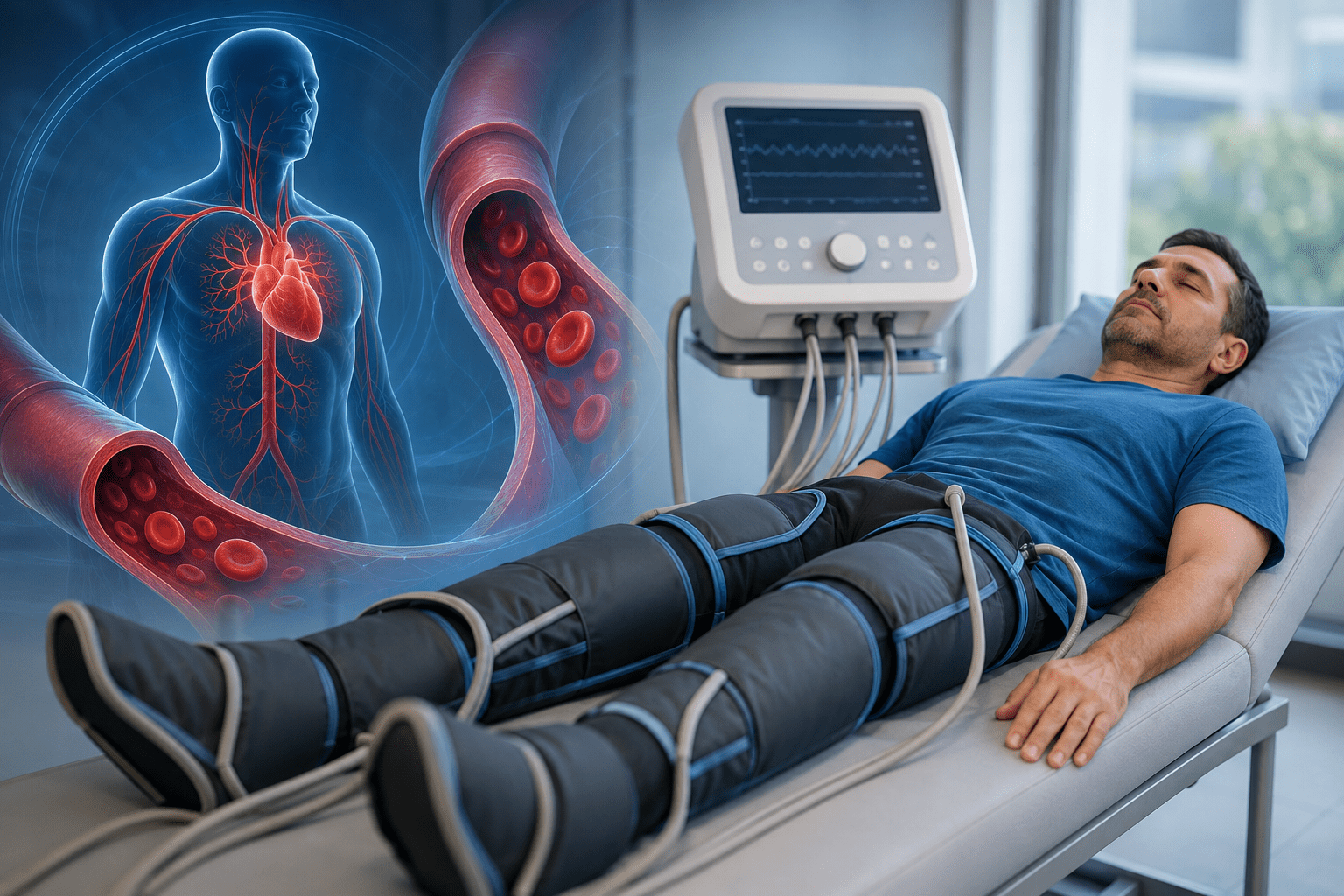
EECP may help erectile dysfunction in some men, particularly when poor vascular function or cardiovascular disease contributes to ED. Enhanced External Counterpulsation (EECP) is a non-invasive treatment that uses inflatable cuffs around the legs to influence blood flow in coordination with the heartbeat.
Small clinical studies have reported improvements in erectile-function scores and penile blood-flow measurements after EECP. However, the evidence specifically for erectile dysfunction is limited compared with established ED treatments. Therefore, EECP should not be described as a guaranteed cure or replacement for standard erectile-dysfunction treatment.
A proper medical evaluation is important because erectile dysfunction can be associated with cardiovascular disease, diabetes, high blood pressure, high cholesterol, obesity, smoking, hormonal problems, medications, or psychological factors.
Enhanced External Counterpulsation (EECP) is a non-invasive cardiovascular therapy that uses inflatable cuffs placed around the patient’s legs.
The cuffs inflate and deflate in synchronization with the heartbeat. The purpose is to influence blood-flow patterns and cardiovascular circulation without surgery or catheter-based intervention.
EECP is best known as a cardiovascular therapy. Current cardiovascular guidelines state that EECP may be considered for relief of symptoms in selected patients with refractory angina who have no other treatment options.
Researchers have also studied EECP treatment for other conditions, including erectile dysfunction.
During an EECP session, the patient lies comfortably on a treatment bed while inflatable cuffs are placed around the lower body.
The treatment generally works through the following process:
The treatment is non-invasive and doesn’t require an incision.
The exact physiological effects of EECP are complex. Research has suggested possible effects on blood flow, endothelial function, collateral circulation, and cardiovascular performance.
An erection requires adequate blood flow into the erectile tissues.
When arteries and the vascular lining don’t function properly, blood flow may become insufficient for achieving or maintaining an erection.
This creates a potential connection between cardiovascular health and erectile function.
Researchers have therefore investigated whether improving vascular circulation through EECP could also influence erectile function.
A 1998 clinical study involving 13 men reported improved penile rigidity and penile peak systolic blood flow after a course of EECP.
A later study of 120 men with severe coronary artery disease and angina also found improvements in erectile-function measures after EECP.
However, these studies don’t establish EECP as a universally effective treatment for erectile dysfunction.
Research on EECP treatment for erectile dysfunction is promising but limited.
A 2018 narrative review examined four studies involving a total of 177 patients. The review reported improvements in erectile-function measurements following EECP treatment courses. However, the authors also noted the limited number of available studies.
Earlier research has also reported improvements in erectile function among men with coronary artery disease-associated ED.
Erectile dysfunction and cardiovascular disease share many risk factors.
Both conditions can be associated with:
Because erections depend on healthy blood vessels, persistent ED can sometimes be a reason to assess cardiovascular risk.
This doesn’t mean every man with ED has heart disease.
It does mean that persistent erectile problems shouldn’t simply be ignored.
Yes, vascular problems can contribute to erectile dysfunction.
An erection requires increased blood flow to the penis. If the blood vessels cannot dilate properly or blood flow is impaired, achieving or maintaining an erection can become more difficult.
However, vascular disease isn’t the only cause of ED.
Other possible causes include:
That’s why identifying the underlying cause is more important than choosing a treatment based only on symptoms.
EECP and conventional ED medications work differently.
PDE5 inhibitor medications are established treatments for many men with erectile dysfunction. EECP, by contrast, is a non-invasive circulation-focused cardiovascular therapy that has also been investigated for ED.
| Treatment | Main purpose |
|---|---|
|
|
|
|
|
|
|
|
|
|
|
|
The most appropriate treatment depends on the underlying cause of ED.
EECP should not automatically be considered a replacement for established erectile-dysfunction medicines.
Some men may benefit from standard ED medication, while others may need treatment for diabetes, high blood pressure, hormonal problems, psychological factors, or vascular disease.
A doctor can determine whether medication, lifestyle changes, EECP, another treatment, or a combination approach is appropriate.
Patients taking nitrate medicines should never combine them with PDE5 inhibitor medicines without medical guidance because the combination can cause a dangerous drop in blood pressure.
Yes. Lifestyle changes can support both cardiovascular and sexual health.
Regular physical activity can support cardiovascular fitness, weight management, and metabolic health.
Smoking damages blood vessels and is associated with cardiovascular disease and erectile dysfunction.
Long-term high blood pressure can damage blood vessels and increase cardiovascular risk.
Diabetes can affect the blood vessels and nerves involved in sexual function.
A heart-friendly eating pattern can include:
Limit excessive intake of highly processed foods, added sugars, trans fats, and excess salt.
Maintaining a healthy weight can help reduce several cardiovascular and metabolic risk factors associated with ED.
WhatsApp us