
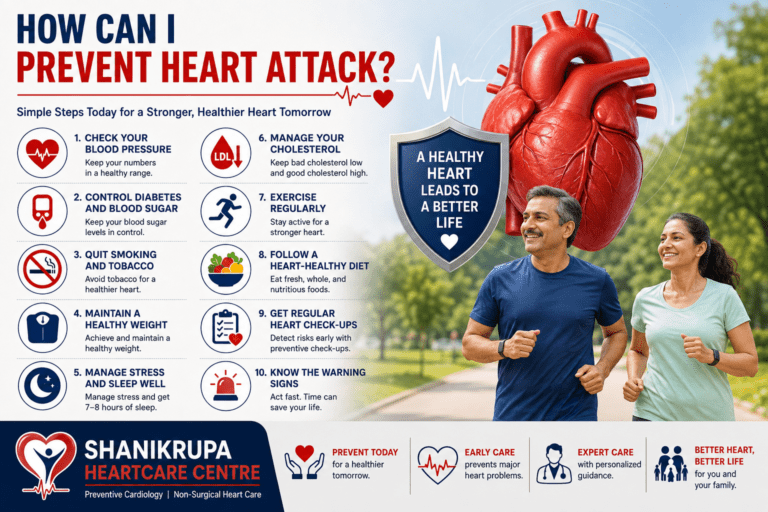
If you are asking, “How can I prevent a heart attack?” the best approach is to focus on your overall cardiovascular health. Managing blood pressure, cholesterol, diabetes, weight, stress, smoking, diet, and physical activity can help reduce your heart disease risk.
What Increases the Risk of a Heart Attack?
Several factors can increase your risk of developing heart disease and experiencing a heart attack. These include:
- High blood pressure
- High LDL cholesterol
- Diabetes
- Smoking and tobacco use
- Obesity
- Physical inactivity
- Unhealthy diet
- Excessive alcohol consumption
- Chronic stress
- Poor sleep
- Family history of heart disease
- Increasing age
Some factors cannot be changed. However, many lifestyle-related risks can be managed with appropriate medical guidance.
1. Check Your Blood Pressure Regularly
High blood pressure can damage your arteries over time. It can also increase the workload on your heart.
Therefore, regular blood pressure monitoring is an important part of heart attack prevention.
If your blood pressure remains elevated, follow your healthcare professional’s treatment recommendations.
2. Manage Your Cholesterol
High LDL cholesterol can contribute to plaque buildup inside the arteries. Therefore, cholesterol management plays an important role in cardiovascular health.
Have your cholesterol levels checked according to your doctor’s recommendations.
Choose more vegetables, fruits, whole grains, legumes, and healthier sources of fat. Also, reduce foods high in saturated and trans fats.
3. Control Blood Sugar and Diabetes
Diabetes can increase the risk of cardiovascular disease. High blood sugar can affect blood vessels over time.
Therefore, maintain healthy blood sugar levels through appropriate diet, physical activity, medication, and regular monitoring.
If you have diabetes, work with your healthcare professional to manage your cardiovascular risk.
4. Quit Smoking
Smoking is a major preventable risk factor for heart disease. Tobacco can damage blood vessels and negatively affect circulation.
Therefore, quitting smoking is one of the most valuable steps you can take for your heart.
If you need help quitting, speak with a qualified healthcare professional about appropriate support.
5. Exercise Regularly
Regular physical activity can strengthen the heart and support healthy circulation. Exercise can also help manage weight, blood pressure, cholesterol, and blood sugar.
Walking, cycling, swimming, and other moderate activities can support cardiovascular fitness.
However, people with existing heart conditions should discuss exercise plans with their healthcare professional first.
6. Maintain a Healthy Weight
Being overweight can increase the risk of several cardiovascular conditions. It can also contribute to high blood pressure, diabetes, and abnormal cholesterol.
Therefore, aim for gradual and sustainable weight management.
A balanced diet combined with regular physical activity can support a healthier weight and better heart health.
7. Eat a Heart-Healthy Diet
Your daily diet can have a major impact on cardiovascular health.
Include plenty of:
- Vegetables
- Fruits
- Whole grains
- Legumes
- Nuts and seeds
- Appropriate lean protein
- Healthy sources of unsaturated fats
Meanwhile, limit highly processed foods, excess salt, added sugars, and unhealthy fats.
8. Reduce Your Salt Intake
Excessive sodium intake can contribute to high blood pressure in some people.
Therefore, reduce heavily processed and packaged foods when possible.
Read nutrition labels and choose fresh foods more often. Herbs and spices can also add flavor without excessive salt.
9. Manage Stress
Long-term stress can affect sleep, eating habits, blood pressure, and overall well-being.
Therefore, healthy stress management should form part of your heart health routine.
Walking, meditation, breathing exercises, yoga, hobbies, and social activities can help support emotional well-being.
10. Get Enough Sleep
Good-quality sleep supports overall cardiovascular health.
Poor sleep may affect blood pressure, metabolism, weight, and daily energy levels.
Therefore, maintain a consistent sleep schedule and create a relaxing bedtime routine.
If you experience persistent sleep problems, discuss them with your healthcare professional.
11. Get Regular Heart Health Checkups
Regular preventive heart checkups can help identify cardiovascular risk factors early.
Depending on your individual risk, an assessment may include:
- Blood pressure measurement
- Blood sugar testing
- Cholesterol testing
- Weight assessment
- Lifestyle evaluation
- Family history review
- Additional cardiac investigations when appropriate
Early identification can help you take timely steps toward better heart health.
12. Know Your Family History
Family history can influence your risk of cardiovascular disease.
Therefore, find out whether close relatives have experienced heart attacks, coronary artery disease, or other cardiovascular conditions.
Share this information with your healthcare professional. It can help guide your personalized prevention strategy.
13. Limit Alcohol Consumption
Excessive alcohol consumption can contribute to several health problems, including elevated blood pressure.
Therefore, responsible choices are important for overall health.
If you consume alcohol, discuss your individual cardiovascular risks with your healthcare professional.
14. Learn the Warning Signs of a Heart Attack
Knowing heart attack symptoms can help you seek emergency care quickly.
Possible symptoms include:
- Chest pressure or discomfort
- Shortness of breath
- Unusual sweating
- Nausea
- Unexplained weakness
- Discomfort in the arm, shoulder, back, neck, or jaw
Symptoms can vary between individuals.
If you suspect that you or someone else is having a heart attack, seek emergency medical care immediately.
15. Consider Preventive Cardiology
Preventive cardiology focuses on identifying and managing cardiovascular risk factors before serious complications develop.
A preventive approach may include lifestyle guidance, risk assessment, medical monitoring, and appropriate treatment.
If you are searching for preventive cardiology in Pune, discuss your individual heart health risks with a qualified healthcare professional.
At Shanikrupa Heartcare Centre, preventive heart care focuses on cardiovascular risk assessment, lifestyle guidance, and individualized care.
Can You Really Prevent a Heart Attack?
Not every heart attack can be prevented. Factors such as age and family history cannot be changed.
However, many important risk factors can be managed.
Controlling blood pressure and cholesterol can help. Managing diabetes, maintaining a healthy weight, exercising regularly, and avoiding tobacco can also support cardiovascular health.
Therefore, heart attack prevention should become a long-term lifestyle goal.
When Should You Get a Heart Health Checkup to Prevent a Heart Attack?
Consider discussing a heart health assessment with your healthcare professional if you have cardiovascular risk factors.
These may include:
- High blood pressure
- Diabetes
- High cholesterol
- Smoking
- Obesity
- Physical inactivity
- Family history of heart disease
Regular assessments can help you understand your current cardiovascular risk and identify areas that need attention.
Prevent a Heart Attack in Pune
If you are looking for heart attack prevention in Pune, focus on early risk assessment and sustainable lifestyle changes.
At Shanikrupa Heartcare Centre, patients can discuss preventive cardiology and personalized heart health strategies with qualified healthcare professionals.
The goal of preventive care is to identify risk factors early and support healthier cardiovascular choices.
How Can I Prevent a Heart Attack?
So, how can I prevent a heart attack?Start by managing the risk factors you can control.
Maintain healthy blood pressure and cholesterol levels. Control blood sugar, avoid tobacco, exercise regularly, and follow a balanced diet.
Additionally, maintain a healthy weight, manage stress, sleep well, and attend appropriate heart health checkups.
Most importantly, do not ignore new or unusual symptoms.
Your heart health deserves attention before a serious problem develops. Start your prevention journey with informed decisions and regular professional care.