
Heart failure can often be managed. Early diagnosis, appropriate treatment, and healthy lifestyle choices can make a meaningful difference.
Have you ever wondered why someone can feel breathless after a short walk? Could persistent tiredness be more than just stress? Is swelling in the feet always harmless?
Sometimes, these signs point to heart failure, a serious cardiovascular condition that deserves attention.
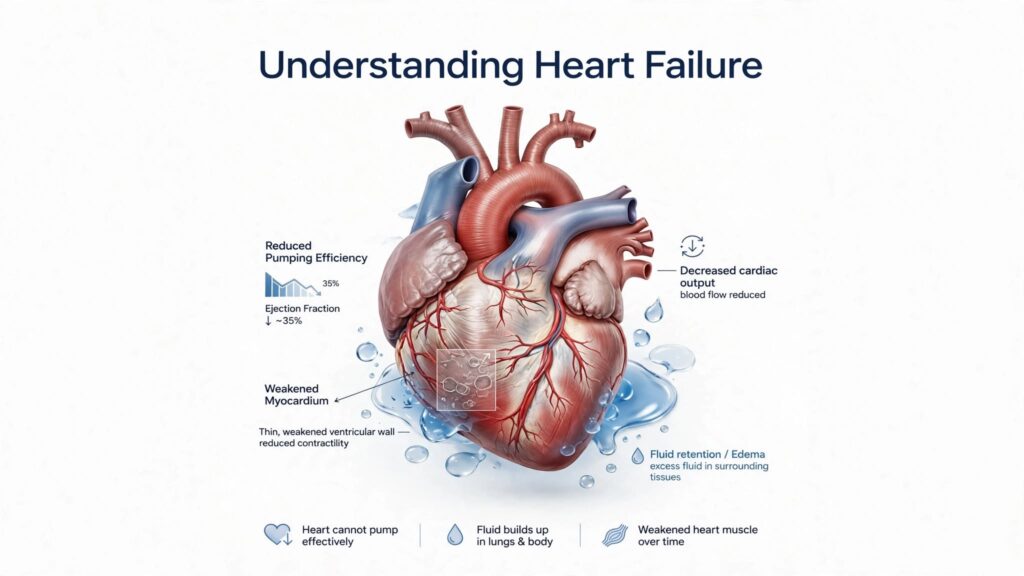
Despite its name, heart failure does not mean the heart has completely stopped working. Instead, it means the heart cannot pump blood effectively enough to meet the body’s needs.
What Is Heart Failure?
It occurs when the heart cannot pump or fill with blood efficiently.
As a result, the body’s organs may receive less oxygen-rich blood. Fluid can also build up in the lungs, legs, feet, or abdomen.
Heart failure can develop gradually or appear suddenly.
It can affect people of different ages. However, the risk generally increases with age and underlying cardiovascular conditions.
Think of the heart as a powerful pump. When that pump becomes weak or stiff, the body’s circulation can become less efficient.
Importantly, heart failure is not the same as a heart attack.
A heart attack happens when blood flow to part of the heart muscle becomes blocked. Heart failure can develop because of several conditions, including previous heart attacks.
What Causes Heart Failure?
Several health conditions can damage or weaken the heart.
Common causes include:
- Coronary artery disease
- Previous heart attack
- High blood pressure
- Cardiomyopathy
- Heart valve disease
- Abnormal heart rhythms
- Congenital heart conditions
- Diabetes
- Certain infections
- Some medications or toxic exposures
High blood pressure deserves special attention.
Over time, uncontrolled blood pressure forces the heart to work harder. Eventually, the heart muscle may become enlarged, stiff, or weakened.
Similarly, coronary artery disease can reduce blood supply to the heart muscle.
Therefore, managing cardiovascular risk factors remains an important part of heart failure prevention.
Early Symptoms of Heart Failure
The symptoms can vary from person to person.
Some people notice mild changes first. Others develop more noticeable symptoms as the condition progresses.
Common symptoms include:
- Shortness of Breath
Breathlessness may occur during exercise or everyday activities.
Some people also experience breathing difficulty while lying down. Waking up breathless at night can also occur.
- Persistent Fatigue
Do you feel unusually tired even after adequate rest?
Reduced cardiac output can contribute to tiredness and reduced exercise tolerance.
Consequently, activities that once felt easy may become surprisingly difficult.
- Swelling in the Legs and Feet
Fluid retention can cause swelling around the ankles, feet, or lower legs.
The swelling may become more noticeable later in the day.
- Rapid or Irregular Heartbeat
Some people experience palpitations or a sensation of a racing heartbeat.
An abnormal rhythm can sometimes contribute to heart failure or worsen existing symptoms.
- Persistent Cough
Fluid accumulation in the lungs can sometimes cause coughing or wheezing.
However, coughing has many possible causes. Therefore, persistent symptoms require proper evaluation.
- Sudden Weight Gain
Rapid weight gain may indicate fluid retention rather than increased body fat.
Tracking weight regularly can therefore provide useful information for some people with diagnosed heart failure.
What Are the Different Types of Heart Failure?
Doctors classify heart failure in several ways.
One important classification relates to how well the heart’s left ventricle pumps blood.
- Heart Failure With Reduced Ejection Fraction
In this condition, the heart’s pumping ability is reduced.
Doctors commonly assess this using ejection fraction, which measures the percentage of blood pumped out during each heartbeat.
- Heart Failure With Preserved Ejection Fraction
Here, the heart may pump a normal percentage of blood.
However, the heart muscle can become stiff and struggle to fill properly.
Therefore, a normal ejection fraction does not always mean that it has been ruled out.
- Heart Failure With Mildly Reduced Ejection Fraction
Some patients fall between the traditional reduced and preserved ejection-fraction categories.
Doctors consider the complete clinical picture when diagnosing and treating these patients.
What Are the Stages of Heart Failure?
Heart failure can also be described using stages.
These stages help healthcare professionals understand disease progression and cardiovascular risk.
Early stages may involve risk factors without symptoms.
Later stages can involve structural heart changes and symptoms.
Advanced heart failure may cause significant limitations despite treatment.
This classification highlights an important message:
Heart health should not begin only after symptoms appear.
Managing blood pressure, cholesterol, diabetes, weight, tobacco exposure, and other risk factors can help protect the heart.
How Is Heart Failure Diagnosed?
Doctors usually combine several pieces of information.
The evaluation may include:
- Medical history
- Physical examination
- Blood pressure measurement
- Electrocardiogram
- Echocardiogram
- Blood tests
- Chest imaging
- Exercise testing
- Other cardiac investigations when appropriate
An echocardiogram can provide valuable information about heart structure and function.
Blood tests may also help doctors assess certain markers associated with it.
However, no single test provides the complete picture in every patient.
Therefore, diagnosis should always involve professional clinical assessment.
How EECP may help in heart failure
EECP treatment uses inflatable cuffs around the calves, thighs, and buttocks. These cuffs inflate and deflate in synchronization with the heartbeat.
This can:
- Increase blood flow toward the heart during diastole.
- Reduce the heart’s workload during systole.
- Improve peripheral circulation.
- Potentially improve exercise tolerance.
- Potentially improve symptoms and quality of life in selected patients.
A 2023 systematic review of EECP in ischemic heart failure found evidence of improved quality of life and functional status. However, the effect on systolic function remained uncertain
“EECP may be an option for selected patients with stable chronic heart failure, particularly when symptoms persist despite conventional treatment. Suitability must be determined through individual medical evaluation.”
Heart Failure and Preventive Heart Care
The management extends beyond treating symptoms.
It also involves understanding the factors that contributed to the condition.
That is where preventive cardiovascular care becomes valuable.
A comprehensive approach can include risk assessment, lifestyle guidance, appropriate testing, and ongoing monitoring.
At Shanikrupa Heartcare Centre, patients can discuss their cardiovascular concerns and understand appropriate heart-health evaluation and management options.
If you have cardiovascular risk factors or persistent symptoms, consider speaking with a qualified healthcare professional rather than waiting for the problem to progress.